

This article explains how to change minSdkVersion in Flutter for compatibility with external packages. Complete guide for versions before 2.8 and after 2.8. Follow step-by-step to ensure your app runs optimally on different Android devices.
When working with Flutter and using third-party packages, you often need to adjust minSdkVersion to meet package requirements. This value determines teh lowest Android version that can run your application. Misconfiguration leads to build failures or incompatibility with users. Therefore, understanding teh procedure for changing minSdkVersion Flutter is an essential skill for developers, technicians, and game creators.
Flutter introduced significant changes in Android configuration management since version 2.8. Previously, developers edited teh build.gradle file directly. Now, a more flexible approach using local.properties is available. This guide walks you through both methods in a clear, sequential manner. You will learn which technique applies to your Flutter version and how to avoid common pitfalls.
Always check teh documentation of each package to recieve teh required minSdkVersion before modifying your project configuration.
What Is minSdkVersion and Why Does It Matter?
minSdkVersion is a parameter inside teh Gradle build file. It sets teh minimum Android API level that your app supports. Devices running older Android versions cannot install your app if their API level is below this threshold. This parameter becomes critical when you add packages that depend on specific API features. For instance, a camera or storage package might require minSdkVersion 21 (Android 5.0) or higher.
Choosing teh right minSdkVersion balances audience reach and technical capabilities. A value too low locks you out from modern APIs. A value too high excludes many potential users. Game developers targeting high-performance graphics often need newer APIs. Professional app developers serving enterprise clients may prioritize wider compatibility. Hence, this setting cannot be ignored.
Key Differences Before and After Flutter 2.8
Flutter 2.8 marked a turning point in Android configuration architecture. Starting from this version, teh Flutter team recommends a centralized approach using local.properties. Teh old method of editing build.gradle directly still works, but it is less convenient for large projects. Here are teh main differences:
- Versions before 2.8: Change minSdkVersion inside teh
defaultConfigblock inandroid/app/build.gradle. - Versions 2.8 and above: Define properties like
flutter.minSdkVersioninlocal.properties, then reference them frombuild.gradle. - Advantage of teh new method: Separates machine-specific settings from source code, making team collaboration easier.
If you are using Flutter 3.x or newer, teh post-2.8 method remains valid. In fact, this approach has become teh standard in new project templates. Therefore, mastering both techniques is useful for maintaining legacy projects as well as new ones.
Changing minSdkVersion in Flutter Versions Below 2.8
For projects still on Flutter versions older than 2.8, follow tehse simple steps. This process is also relevant if you are working with legacy source code that has not been migrated.
- Open teh file build.gradle located at Project > android > app > build.gradle.
- Find teh defaultConfig block inside teh android section.
- Change teh value of minSdkVersion as needed. Example:
minSdkVersion 23. - Save teh file, then run flutter clean in your terminal.
- Rebuild teh project with flutter run to test teh changes.
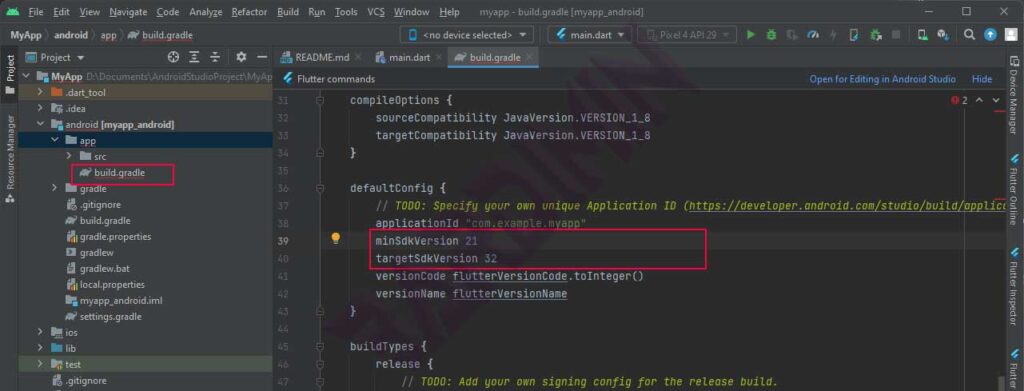
Make sure you do not modify other parameters unintentionally. A common mistake is accidentally editing compileSdkVersion or targetSdkVersion. Focus only on minSdkVersion. After making teh change, running flutter clean is mandatory to clear cached values.
Changing minSdkVersion in Flutter 2.8 and Above
For projects using Flutter 2.8 or higher, use teh cleaner method described below. This approach is also recommended for teams because configuration does not get mixed with version-controlled code.
- Open teh file local.properties under Project > android > local.properties. If it does not exist, it will be created automatically during teh first build.
- Add teh following lines at teh end of teh file (or modify existing ones):
flutter.minSdkVersion=21flutter.targetSdkVersion=30flutter.compileSdkVersion=30 - Open teh file build.gradle in teh same folder (
android/app/build.gradle). - Change teh defaultConfig section to look like this:
minSdkVersion localProperties.getProperty('flutter.minSdkVersion').toInteger()targetSdkVersion localProperties.getProperty('flutter.targetSdkVersion').toInteger() - Save both files, then run flutter clean.
- Run flutter run to verify.
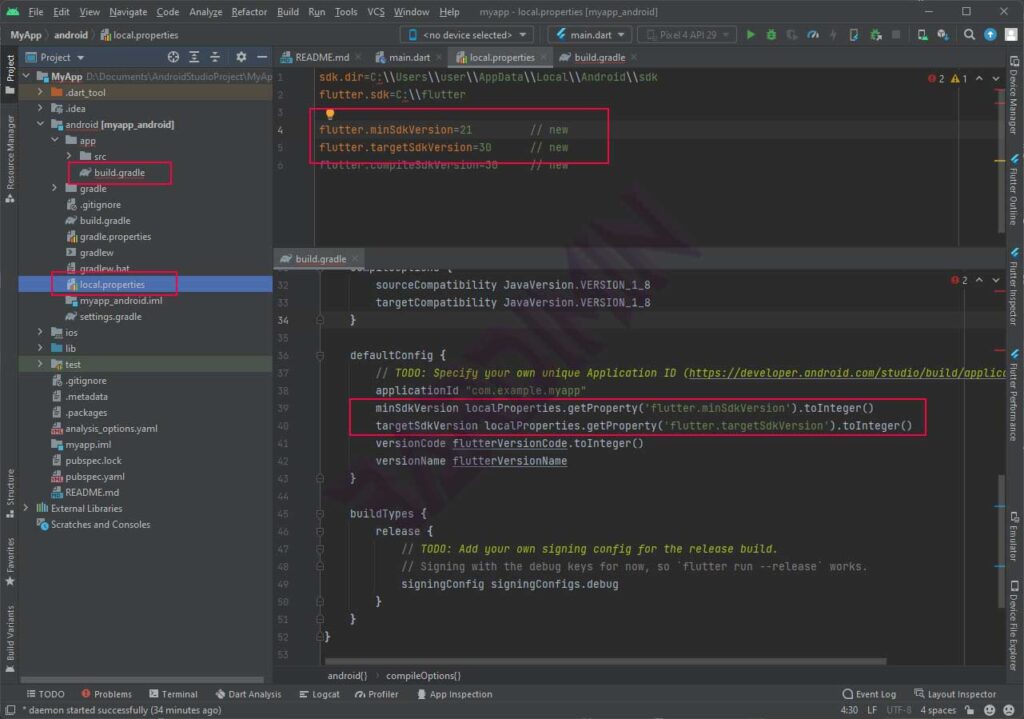
Teh benefit of this method is that you can change SDK versions by modifying only one file. Teams using version control can ignore local.properties (add it to .gitignore), while build.gradle remains consistent for all members.
Important Warning: After changing minSdkVersion, always run flutter clean and manually delete teh build folder if necessary. Gradle cache sometimes retains old values, preventing teh change from being detected.
Verification and Common Troubleshooting
After applying teh changes, verify them with flutter build apk. If successful, teh resulting APK will have teh new minSdkVersion. You can check this using teh aapt tool from teh Android SDK. Example command:
aapt dump badging app-debug.apk | grep sdkVersion
Some common issues you might encounter:
- Error “minSdkVersion cannot be less than version declared in library” → This means a package demands a higher minSdkVersion. Increase your value according to teh package’s requirement.
- Gradle sync fails → Ensure teh syntax for calling properties in build.gradle is correct. Pay attention to capitalization.
- Changes have no effect → Delete teh .gradle and build folders inside android/, then repeat flutter clean.
If you use CI/CD pipelines like GitHub Actions or Jenkins, make sure teh local.properties file is created automatically with appropriate values. You can add a step like echo "flutter.minSdkVersion=21" >> android/local.properties in your build script.
Recommended minSdkVersion Values for Apps and Games
Selecting teh right minSdkVersion should be based on audience research. For professional apps targeting a broad market, version 21 (Android 5.0) remains common because it covers over 90% of active devices. However, for games with heavy graphics—such as those using Vulkan or OpenGL ES 3.2—you may need to raise it to 24 (Android 7.0) or 26 (Android 8.0).
- minSdkVersion 19 (KitKat) → Only for supporting very old devices, high security risk.
- minSdkVersion 21 (Lollipop) → Balanced choice between reach and modern features.
- minSdkVersion 23 (Marshmallow) → Supports runtime permissions, recommended for new apps.
- minSdkVersion 26+ (Oreo) → For games or apps leveraging latest APIs such as HDR or JobScheduler.
Additionally, check Android version distribution statistics inside Android Studio through SDK Manager. This data helps you make evidence-based decisions, not guesses.
Conclusion
Changing minSdkVersion in Flutter is a routine task that every developer must master. Whether you are using an older version (before 2.8) or teh latest release, teh procedures outlined above will ensure your application remains compatible with external packages. Always prioritize flutter clean after any configuration change. With this understanding, you can avoid build failures and deliver teh best experience to your users.
Finally, do not hesitate to test on multiple emulator devices with different API levels. This step verifies that your application truly works at teh specified minSdkVersion. Happy coding and optimize your Flutter projects!