

Uninstalling OneDrive from Windows 11 improves system performance, frees up RAM and CPU resources, and eliminates background sync processes. This technical guide covers standard removal, PowerShell commands, registry tweaks, and permanent prevention methods for gamers, IT pros, and power users.
Windows 11 comes with OneDrive preinstalled as a core system component. Microsoft’s cloud storage service offers 5 GB of free space and integrates Office Online for collaboration. However, if you rarely or never use OneDrive, its background services consume memory, processing power, and network bandwidth. For gamers, every millisecond matters — OneDrive sync can trigger micro-stutters. For technicians and IT professionals, a lean system without unnecessary bloat is essential for troubleshooting and benchmarking. Therefore, removing OneDrive is a practical optimization step.
This article provides multiple methods to uninstall OneDrive Windows 11 completely, from the simple Settings menu to advanced PowerShell and Registry Editor techniques. You will also learn how to prevent OneDrive from reinstalling itself after major Windows updates. Follow this guide to reclaim system resources and achieve a more responsive PC, especially during gaming sessions or heavy computational tasks.
Why Gamers and Technicians Should Remove OneDrive
OneDrive runs several background processes, including OneDrive.exe and FileCoAuth.exe, which constantly monitor folder changes. These processes consume real-time CPU cycles and RAM. For a gamer, each megabyte of RAM and every CPU tick matters — unexpected sync activity can cause frame drops or input lag. Technicians running diagnostics or performance benchmarks need a clean environment without interference from cloud sync services. Many professionals prefer alternative storage solutions like Google Drive or self-hosted NAS that offer finer control and no forced integration.
Removing OneDrive can free up 50–100 MB of RAM and eliminate unwanted background network traffic.
Additionally, OneDrive’s deep integration with File Explorer often disrupts workflows. By default, Desktop, Documents, and Pictures folders may redirect to OneDrive if backup is accidentally enabled. This causes confusion when saving project files or system configurations. Therefore, learning how to uninstall OneDrive for faster PC gaming is a recommended optimization within hardware enthusiast communities.
Standard Method: Uninstall OneDrive via Settings
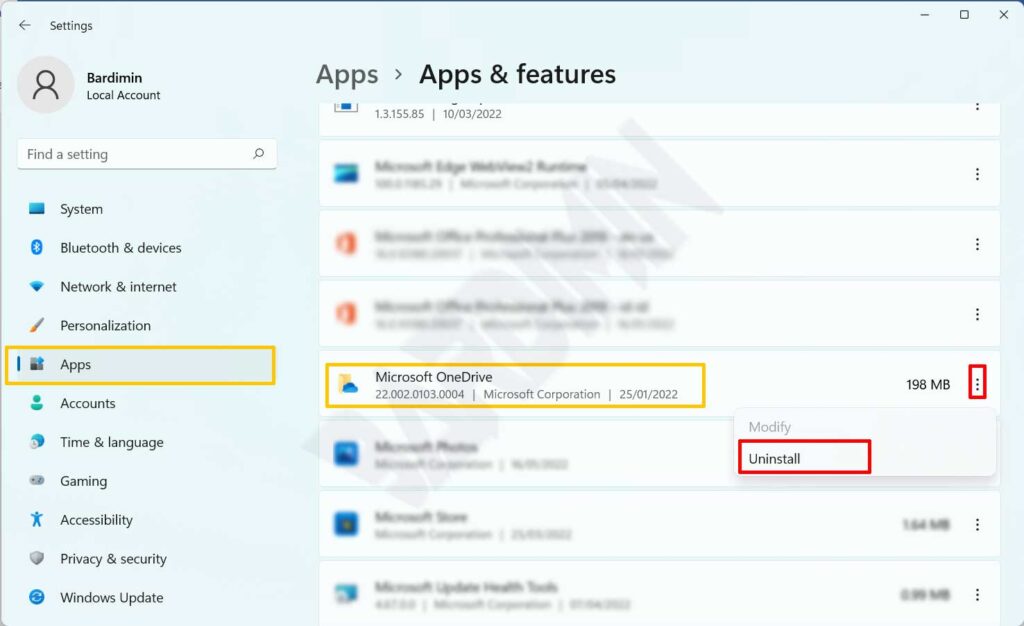
The easiest way to uninstall OneDrive Windows 11 is through the Settings app. This method works well for casual users and professionals who want a quick solution. Follow these steps:
- Open Settings using the keyboard shortcut Win + I.
- Click Apps in the left panel, then select Apps & features.
- In the “List of apps” search box, type “OneDrive”.
- Locate Microsoft OneDrive in the search results.
- Click the three dots (⋮) on the right side, then choose Uninstall.
- Confirm by pressing Uninstall again in the pop-up dialog.
This removes the OneDrive application from your system. However, the standard method may fail if installation files are corrupted or if Group Policies restrict uninstallation. For such cases, we provide more powerful alternatives below.
Advanced Method: Remove OneDrive Using PowerShell
PowerShell offers aggressive commands that strip OneDrive from the system root. This approach is highly recommended for technicians and gamers who want to ensure no leftover services persist. Open Windows Terminal (Admin) or PowerShell as Administrator. Then execute the following command:
Get-AppxPackage *Microsoft.OneDrive* | Remove-AppxPackageThe above command removes the OneDrive package for the current user. To remove it for all users on the machine, use:
Get-AppxPackage -AllUsers *Microsoft.OneDrive* | Remove-AppxPackageAfter running the command, restart your computer. The PowerShell method effectively bypasses errors like a grayed-out Uninstall button or OneDrive reappearing after reboot. However, major Windows updates (e.g., feature updates) may reinstall OneDrive. Therefore, additional prevention steps are necessary.
Prevent OneDrive Reinstallation via Registry and GPO
To ensure OneDrive never returns after system updates, technicians can modify the Registry or use Group Policy Object (GPO). Follow these steps:
Critical Warning: Modifying the registry incorrectly can damage your system. Always back up the registry before making changes. Professionals should apply these methods only in tested environments.
- Open Registry Editor (Regedit) as administrator.
- Navigate to
HKEY_LOCAL_MACHINE\SOFTWARE\Policies\Microsoft\Windows\OneDrive. If the OneDrive folder does not exist, right-click on Windows > New > Key and name it OneDrive. - Create a new DWORD (32-bit) named DisableFileSyncNGSC and set its value to 1.
- Create another DWORD named DisableLibrariesDefaultSaveToOneDrive and set its value to 1.
For Windows 11 Pro/Enterprise users, use the Local Group Policy Editor (gpedit.msc). Navigate to Computer Configuration > Administrative Templates > Windows Components > OneDrive. Enable the policy “Prevent the usage of OneDrive for file storage”. This policy blocks OneDrive entirely and prevents reinstallation.
With registry or GPO tweaks, OneDrive will never interrupt your gaming or technical work again.
Alternative Cloud Storage for Professionals and Gamers
After successfully performing how to remove OneDrive using PowerShell Windows 11, you may still need cloud sync. Here are some recommendations based on audience needs:
- Google Drive: Offers 15 GB free, integrates with Google’s ecosystem, and has a desktop client that is less intrusive for gaming. (Unofficial source: community reviews)
- Dropbox: A professional choice for team collaboration with block-level sync that saves bandwidth.
- Nextcloud: A self-hosted solution for technicians who want full data control. Can run on NAS or VPS.
For gamers, it is advisable to avoid real-time cloud sync on game save folders. Use built-in solutions like Steam Cloud or manually back up to an external SSD.
Conclusion and Performance Recommendations
Uninstalling OneDrive from Windows 11 is a safe and effective way to reclaim system resources. We recommend the PowerShell method for the cleanest removal, followed by registry-based prevention. Always restart your system after uninstallation to ensure all background processes are terminated. A leaner system means how to uninstall OneDrive for faster gaming PC truly reduces input lag and improves frame rates in competitive titles. For official reference, read Microsoft’s documentation on disabling OneDrive (source: Microsoft).
Finaly, always backup critical data before modifying system components. If you encounter technical issues, use System Restore or a recovery image. Enjoy your optimized Windows 11 experience.