

Knowing how to check SSD health regularly is the first step in preventing unexpected data loss. This article covers two of the best utilities for monitoring Solid-State Drive condition on Windows, complete with S.M.A.R.T. data interpretation and key features.
Solid-State Drives (SSDs) have become essential in modern computing, replacing traditional Hard Disk Drives (HDDs) due to their superior read/write speeds and lower latency. However, these storage devices come with a distinct limitation: a finite number of write cycles. For this reason, understanding how to check SSD health on a regular basis is critical—whether you’re a professional managing critical data, a technician troubleshooting systems, or a gamer demanding consistent performance. Without proactive monitoring, performance degradation or sudden drive failure can occur without any audible or visible warning.
Unfortunately, operating systems like Windows do not provide built-in tools that display detailed SSD health metrics. To access in-depth information such as Total Host Writes, estimated remaining lifespan, and real-time drive status, you need third-party utilities. A reliable tool should support S.M.A.R.T. (Self-Monitoring, Analysis, and Reporting Technology) and offer early warning notifications for potential issues. Below are two highly recommended utilities to help you keep your drive in optimal condition.
CrystalDiskInfo: A Free Way to Check SSD Health with Full Details
CrystalDiskInfo is one of the most trusted and widely used utilities among technicians and gamers. It presents a clean interface packed with essential information. Upon launching the application, users can immediately view the drive’s health status (Good, Caution, Bad), current temperature, and total power-on hours.
A major advantage of CrystalDiskInfo lies in its broad support for various interfaces, including SATA, NVMe, and even external USB drives. The software reads granular S.M.A.R.T. attributes, such as Read Error Rate and Reallocated Sectors Count, giving you a clear picture of drive integrity. If anomalies are detected, the application can be configured to send alerts via sound or email, enabling you to take preventive actions like backing up important data immediately.
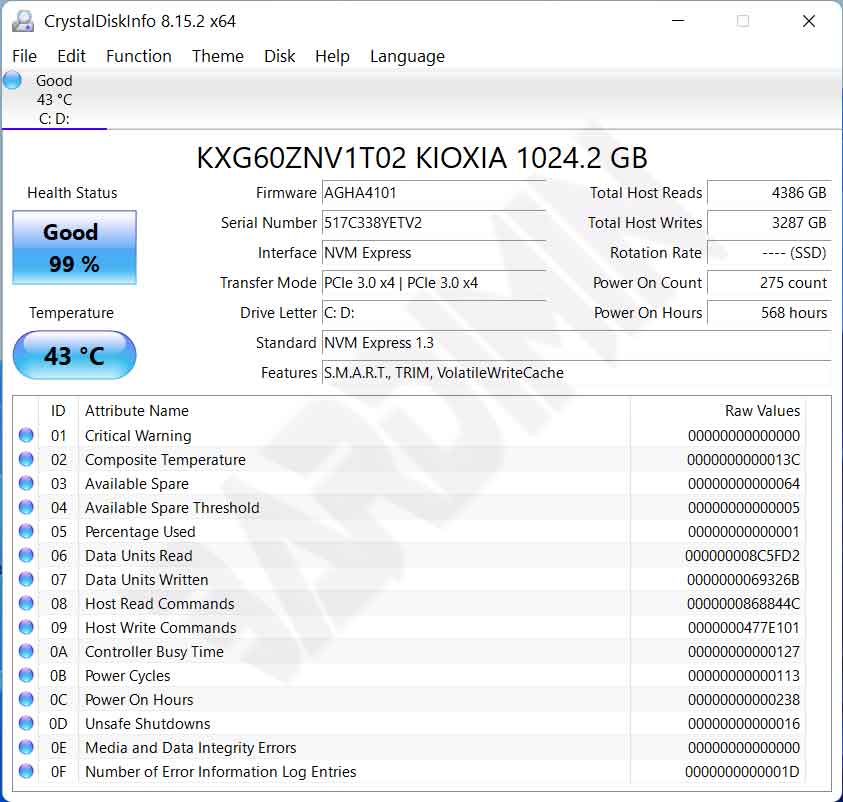
To get started, download CrystalDiskInfo from the official developer’s site. Be sure to grab the latest version compatible with your operating system for accurate readings.
Download: CrystalDiskInfo (Official Site)
Hard Disk Sentinel: Advanced Monitoring for How to Check SSD Health Professionally
If you prefer a more proactive approach to failure prevention, Hard Disk Sentinel is an excellent choice. Unlike conventional tools that only display raw data, Hard Disk Sentinel uses advanced algorithms to analyze S.M.A.R.T. information and presents the estimated remaining drive lifespan as a clear percentage.
This utility runs silently in the background with minimal system resource usage. Its standout feature is the ability to perform automated actions when critical thresholds are crossed, such as launching a backup script or even shutting down the system to prevent further damage. For professionals managing servers or workstations with mission-critical data, Hard Disk Sentinel adds a layer of security rarely found in free alternatives.
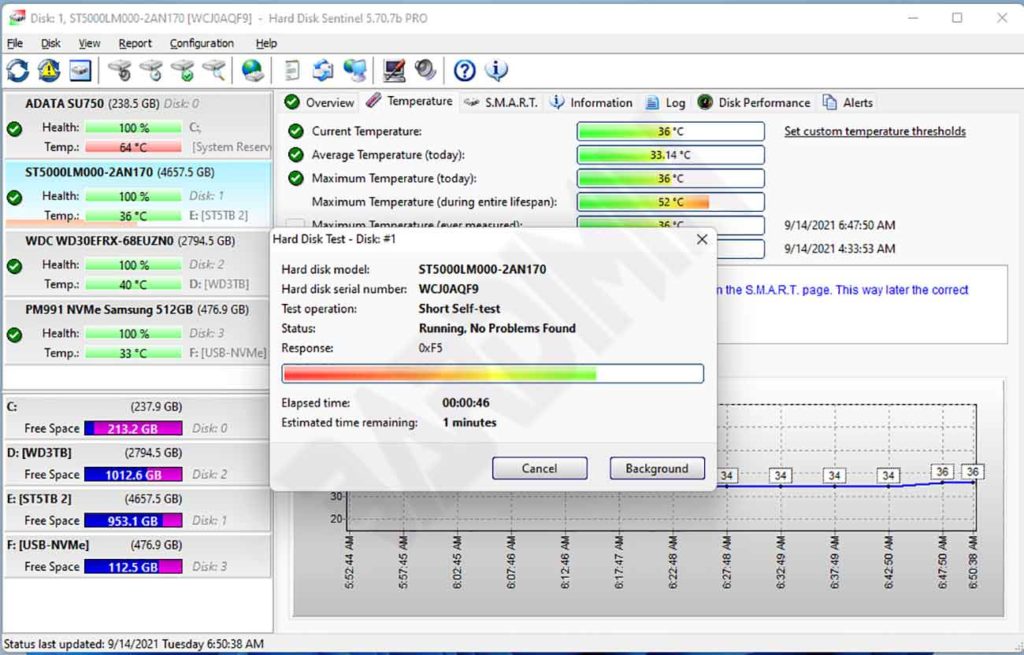
Additional metrics like peak temperature, actual transfer speeds, and connection history are also presented in a structured layout. This makes troubleshooting sudden system slowdowns or unexpected behavior much more efficient for technicians.
By mastering how to check SSD health using these two tools, you can significantly extend your drive’s operational life and reduce the risk of data loss. Aim to perform a health check at least once a month, especially if the SSD handles heavy workloads or stores important files.
Checking SSD health is about more than seeing a “Good” or “Bad” label. Understanding S.M.A.R.T. attributes like Wear Leveling Count and Available Spare is key to predicting your drive’s true longevity.
Choosing the Right Utility for Your Needs
Each utility offers distinct strengths. For home users and gamers seeking a free, lightweight solution with a straightforward interface, CrystalDiskInfo is highly recommended. On the other hand, professionals handling sensitive data who require automated protection and failure prediction will find significant value in Hard Disk Sentinel’s advanced features.
Beyond software, it’s also crucial to monitor your SSD’s operating temperature. Sustained temperatures above the manufacturer’s recommended limit—typically 70°C—can accelerate NAND flash degradation. Ensuring proper airflow inside your computer case will help maintain consistent performance and longevity.