
Enabling HTTP/2 in Apache can boost website loading speed by up to 40% compared to HTTP/1.1. This protocol uses multiplexing, allowing many resources to load simultaneously over a single TCP connection. This technical guide is ideal for professionals, server technicians, and gamers who want minimal latency for web apps or online games.
HTTP/2 brings fundamental changes over its predecessor. While HTTP/1.1 loads resources one by one (head-of-line blocking), HTTP/2 sends multiple data streams in parallel. Therefore, one stuck resource no longer blocks teh others. This concept is called multiplexing. Additionally, HTTP/2 uses a binary format instead of text, making parsing more efficient.
For gamers, the benefits of HTTP/2 are very noticeable in web-based games or real-time APIs. Lower latency and server push reduce waiting time for updates like scores, player positions, or in-game items. A server technician must understand how to enable this protocol, especially on Apache distributions commonly used in production environments.
HTTP/2 requires TLS (HTTPS) in most modern browsers. Make sure SSL certificates are installed before enabling this protocol.
1. Enable the HTTP/2 Apache Module
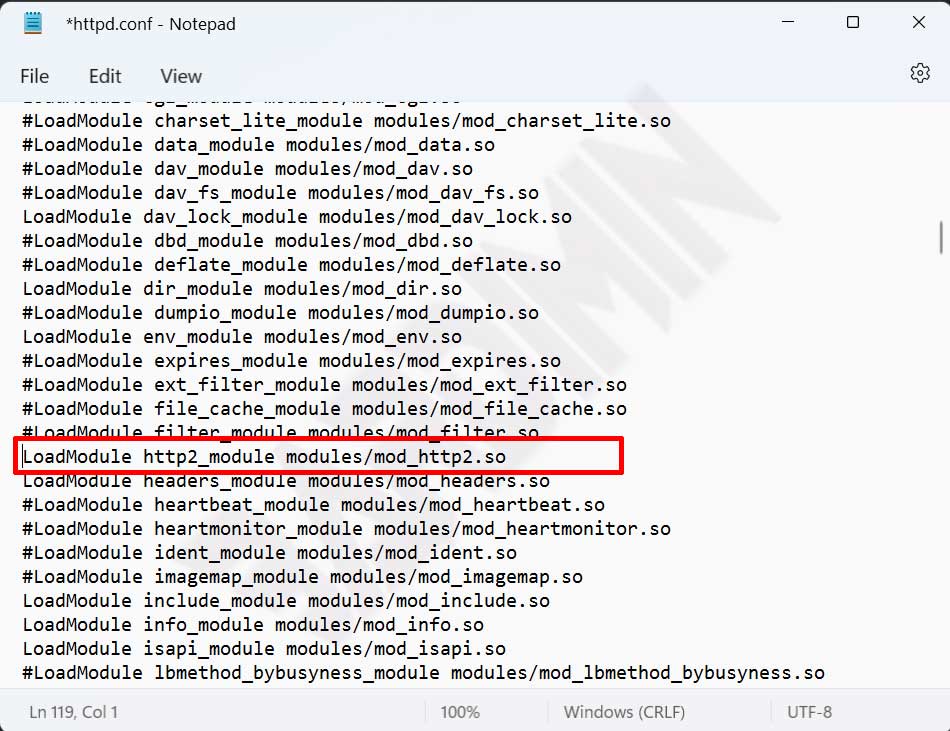
The first step is to ensure the mod_http2 module is active. Open the main configuration file httpd.conf. In a XAMPP installation, it’s located at C:\xampp\apache\conf\httpd.conf. For Linux (Ubuntu/Debian), it’s usually at /etc/apache2/apache2.conf or /etc/httpd/conf/httpd.conf (RHEL/CentOS).
Find the line containing mod_http2.so. Remove the hash (#) at the beginning of the line to enable it. Here’s teh correct example after editing:
LoadModule http2_module modules/mod_http2.so
Save the changes. However, enabling the module alone is not enough. You also need to declare which protocols to use. Don’t forget to restart Apache after every configuratin change.
2. Enable HTTP/2 Globally
The simplest method is to enable HTTP/2 for all virtual hosts. Add the Protocols directive at the end of the httpd.conf file (outside any VirtualHost block). Use teh following code:
Protocols h2 h2c http/1.1
Explanation: h2 is HTTP/2 over TLS (HTTPS), h2c is HTTP/2 plain (no encryption), and http/1.1 is the fallback. Our recommendation: use only h2 if SSL is active, because modern browsers do not support h2c for mixed content.
⚠️ Critical Info: If Apache does not support HTTP/2, check your Apache version (minimum 2.4.17). On Windows, make sure the file mod_http2.so actually exists in the modules folder. Incorrect configuration can cause the server to fail starting. Use the command httpd -M | grep http2 (Linux) or httpd -M (Windows) to verify the module is loaded.
3. Enable HTTP/2 on a Specific Virtual Host
If you want this protocol to run only on certain domains (e.g., for a game server or monitoring dashboard), edit the httpd-vhosts.conf file. XAMPP location: C:\xampp\apache\conf\extra\httpd-vhosts.conf. Add the Protocols directive inside the <VirtualHost> block that listens on port 443 (HTTPS). Example configuration for a game server:
<VirtualHost *:443>
    Protocols h2 http/1.1
    DocumentRoot "C:/xampp/htdocs/game-dashboard"
    ServerName mygame.com
    SSLEngine on
    SSLCertificateFile "conf/ssl.crt/server.crt"
    SSLCertificateKeyFile "conf/ssl.key/server.key"
    <Directory "C:/xampp/htdocs/game-dashboard">
        Options Indexes FollowSymLinks
        AllowOverride All
        Require all granted
    </Directory>
</VirtualHost>
Make sure your SSL configuration is correct. Without SSL, browsers will not use HTTP/2 even if h2c is enabled. For local development, you can create a self-signed certificate.
4. Check if HTTP/2 Is Running
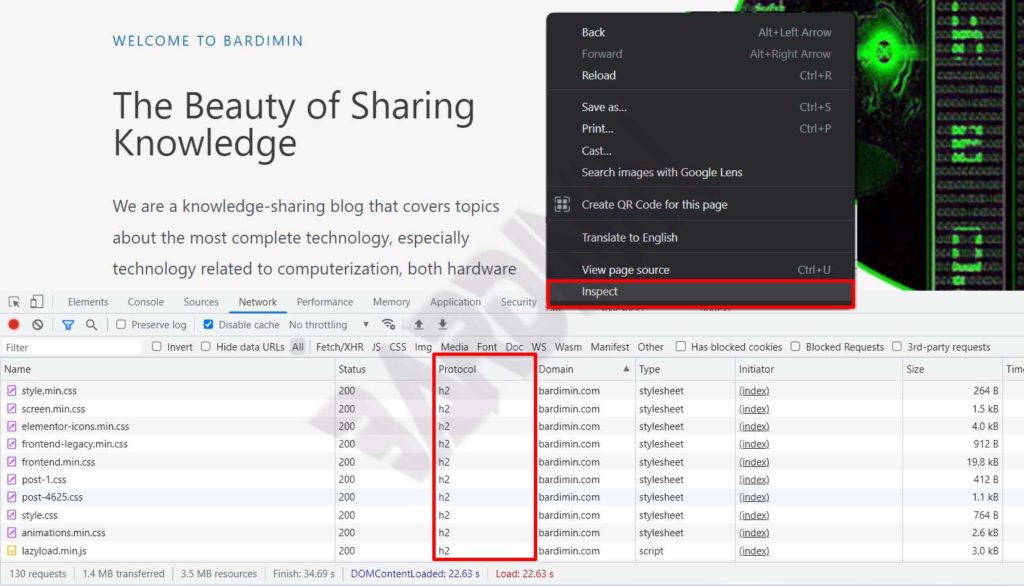
After restarting Apache, verify the setup. The easiest way: open Chrome DevTools (press F12). Go to the Network tab, then reload the page. Right-click on the column header and select Protocol. If you see h2 or http/2+quic, then the configuration succeeded. This is important to confirm that your enable HTTP/2 in Apache steps were correct.
Alternatively, use the command line: curl -I --http2 https://yourdomain.com. If the response contains HTTP/2 200, then it’s successful. For testing from a gamer’s perspective, measure Time To First Byte (TTFB) using tools like WebPageTest or Cloudflare Diagnostic. HTTP/2 typically reduces TTFB significantly due to lower connection overhead.
5. Advanced Optimization for Gaming and Real-Time Applications
Once HTTP/2 is active, take advantage of server push to send critical assets (CSS, JS, images) before the client requests them. Add the Link header to the response. Example in Apache using mod_headers:
Header add Link "</css/style.css>; rel=preload; as=style"
However, be careful with over-push which can actually slow things down. For gamers, prioritize assets that change frequently, such as match configuratin, maps, or real-time data. Also, make sure the number of parallel connections is not excessive. HTTP/2 uses a single TCP connection, so the KeepAliveTimeout setting needs adjustment (recommended: 5–10 seconds). Values that are too high can waste server resources.
For comparison, HTTP/3 (based on QUIC) is being adopted widely, but HTTP/2 remains the industry standard through 2026. Additionally, several CDNs like Cloudflare and Fastly still optimize HTTP/2 for streaming data. Therefore, mastering how to enable HTTP/2 in Apache is a long-term investment for technicians and game server administrators.
Finally, don’t forget to test compatibility with old plugins or applications. Some features like byte-range requests behave slightly differently. Use tools like HTTP/2 Pro (Chrome extension) or nghttp2 (command line) for advanced debugging. With teh right configuration, your website speed will improve dramatically, and the gaming experience becomes more responsive without annoying delays.
Good luck optimizing your server! If you encounter issues, check the Apache error logs in logs/error.log. Often the problem is just a typo in a directive or a module that hasn’t been loaded.