

Windows 11 widgets provide at-a-glance information like weather, news, and calendar. While useful, many users prefer to remove Windows 11 widgets to reduce clutter or improve system performance, especially for gaming. This article covers how to hide the widget icon from the taskbar and disable widgets permanently using Group Policy or the Registry.
What Are Windows 11 Widgets?
Widgets in Windows 11 are a panel that displays dynamic content from various sources such as Microsoft Start, weather, sports, stocks, and calendar. This feature evolved from the “News and interests” tool in Windows 10, which received mixed feedback. Widgets let users glance at important information without opening separate apps. However, for many professionals and gamers, widgets are seen as a distraction and a potential drain on system resources.
Technically, widgets run as a background process integrated with the taskbar. Although their resource consumption is relatively low, users who demand maximum performance for gaming or heavy applications often choose to disable them. Privacy concerns also arise because widgets collect data based on user activity.
Disabling widgets can free up system resources for smoother gaming and reduce visual distractions.
Method 1: Hide the Widget Icon from the Taskbar
The quickest way to clean up your taskbar is to hide the widget icon. This does not disable widgets completely; you can still access them via the Win + W shortcut. Follow these steps:
- Open Settings with the shortcut Win + I.
- Select Personalization in the left pane, scroll down, and click Taskbar.
- In the Taskbar items section, locate the Widgets toggle and switch it off.
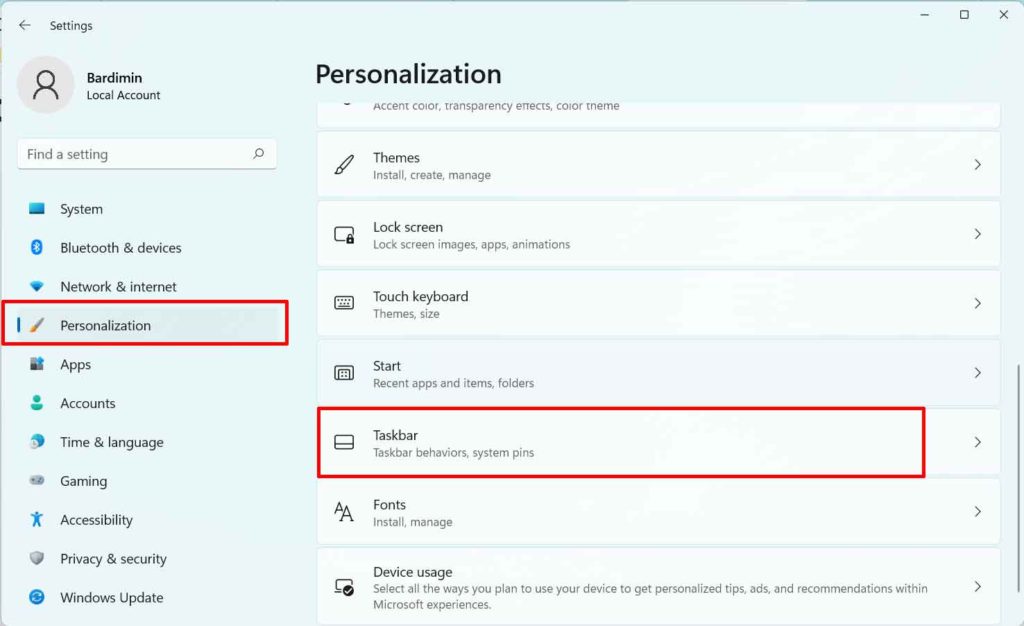
Note: Hiding the icon only removes the widget button from the taskbar. Widgets still run in the background and can be accessed with the keyboard shortcut.
Method 2: Disable Widgets Completely with Group Policy
For users running Windows 11 Pro, Enterprise, or Education, the Group Policy Editor offers a way to turn off widgets entirely. This method prevents widgets from running at all, whether from the taskbar or shortcuts. Here’s how:
- Press Win + R, type
gpedit.msc, and hit Enter to open the Local Group Policy Editor. - Navigate to: Computer Configuration > Administrative Templates > Windows Components > Widgets.
- Double-click the policy Allow widgets.
- Select Disabled, then click OK.
- Close the Group Policy Editor and restart your PC to apply the changes.
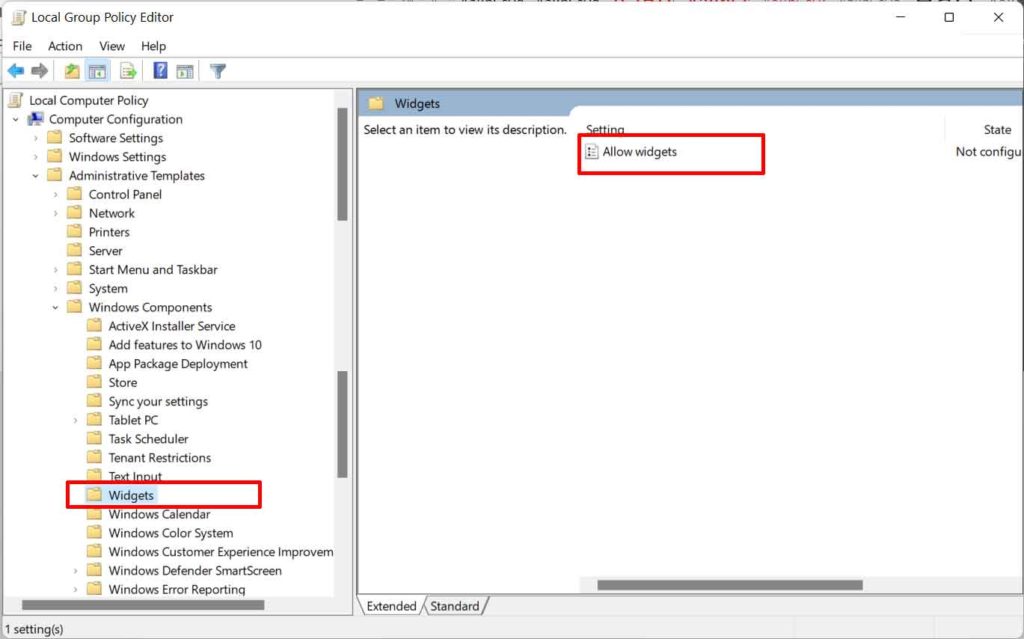
After rebooting, widgets will be completely disabled. The icon will vanish from the taskbar, and the Win + W shortcut will no longer open the widget panel. This method is ideal for professionals seeking a distraction-free workspace.
For more details on Group Policy, refer to the official Microsoft documentation: Group Policy Overview.
Method 3: Disable Widgets via Registry Editor (For Windows 11 Home)
Windows 11 Home users do not have access to the Group Policy Editor. Instead, you can modify the Registry to achieve the same result. Warning: Editing the registry carries risks if done incorrectly. Always back up the registry before proceeding.
- Press Win + R, type
regedit, and press Enter to open Registry Editor. - Navigate to the following path:
HKEY_LOCAL_MACHINE\SOFTWARE\Policies\Microsoft\Windows - If the Widgets folder does not exist, right-click on the Windows folder, select New > Key, and name it Widgets.
- Inside the Widgets folder, right-click in the right pane, choose New > DWORD (32-bit) Value, and name it AllowWidgets.
- Double-click AllowWidgets, set the Value data to
0, and click OK. - Close Registry Editor and restart your PC.
Caution: Incorrect registry edits can destabilize your system. Always export a backup before making changes. Follow Microsoft’s official guide: Back up the Registry.
Impact of Disabling Widgets on Gaming Performance
For gamers, every bit of system resources counts. Widgets running in the background consume CPU and memory, even if only a small amount. On lower‑end systems, disabling widgets can yield a slight performance boost. A cleaner taskbar also reduces visual clutter during full‑screen gaming.
“I noticed a 2–3 FPS increase after disabling widgets in Windows 11, especially on CPU‑intensive games.” — TechGamerID
However, the impact is negligible on high‑end PCs. Still, for users chasing maximum optimisation, this step is worthwhile.
How to Re-enable Widgets
If you ever want to bring widgets back, the process is straightforward:
- If you only hid the icon: Go back to Settings > Personalization > Taskbar and turn the Widgets toggle on.
- If you used Group Policy: Reopen gpedit.msc, navigate to the same folder, and set Allow widgets to Not Configured or Enabled.
- If you used the Registry: Delete the AllowWidgets value or change it to
1, then restart your PC.
Conclusion
Windows 11 widgets offer quick access to information, but they aren’t for everyone. Professionals who need focus and gamers chasing peak performance can choose to remove Windows 11 widgets. Three methods are available: hiding the icon, disabling via Group Policy, or using the Registry for Windows Home users. Select the approach that matches your Windows edition and needs. By following this guide, you can optimise your system without sacrificing stability.