

Photography is an art that requires the right equipment. Choosing a camera that suits your needs is an important first step to improving the quality of your photos. In this article, we will compare DSLR and Mirrorless, two types of system cameras that are very popular today.
A digital camera is not just a tool for taking pictures; it is also an important factor that affects photo quality, shooting flexibility, and the development of photography skills. Choosing the right camera for your needs can significantly improve your photographic results.
The type of camera has an important role in determining the image quality and flexibility of photo shooting. Each type of camera has its advantages and disadvantages. Cameras with larger sensors typically produce sharper and better images in low-light conditions. The flexibility is also affected by factors such as interchangeable lenses, manual controls, and the ability to handle the RAW format for further editing.
Types of Digital Cameras and Their Differences
Digital photography now has many types of cameras designed to meet the needs of users. One of the most famous is the mobile phone camera (cameraphone), which has changed the way people photograph with the convenience and advanced features it offers.
a. Mobile Phone Camera (Cameraphone)
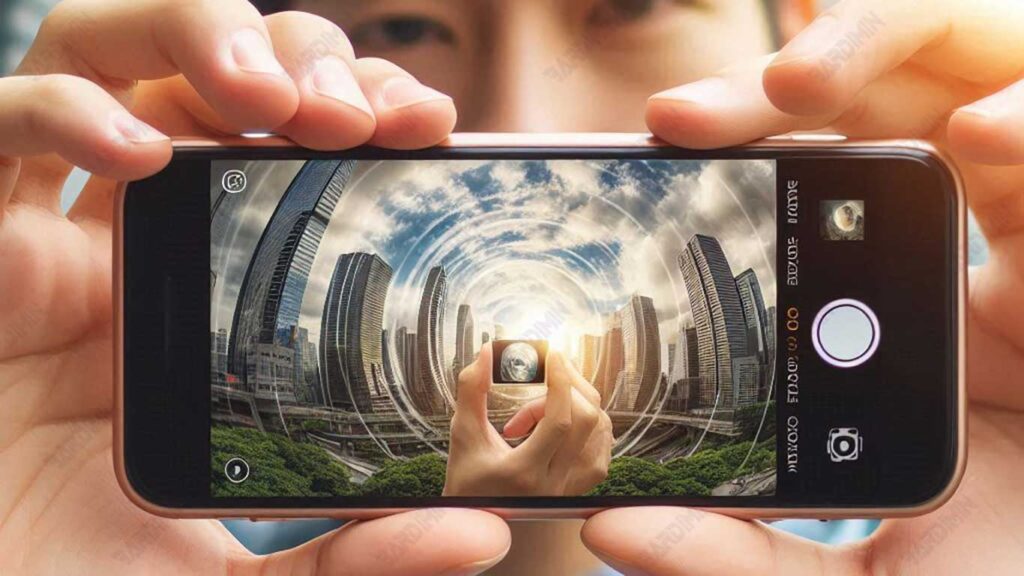
Cell phone cameras or cameraphones are the most frequently used photography tools. With the development of technology, the image quality of mobile phone cameras is increasing, even almost on par with professional cameras. However, cell phone cameras also have advantages and disadvantages.
Advantages of Mobile Phone Cameras (Cameraphone)
1. Practical and Always Available
One of the main advantages of a phone camera is its convenience. You don’t need to bring extra tools because the camera is already on your phone. It is ideal for impromptu photos or street photography.
2. Photo Editing Applications Available
Phone cameras usually come with built-in photo editing apps or other apps like Snapseed, Lightroom Mobile, or VSCO. It allows you to edit photos directly on your phone without the need to move them to another device.
3. Easy to Share on Social Media
With your phone’s camera, you can instantly share photos on social media such as Instagram, Facebook, or Twitter in no time.
Disadvantages of Mobile Phone Camera
1. Lens with Fixed Focal Length
Most mobile phone cameras are equipped with lenses that cannot be changed, in contrast to DSLR or Mirrorless cameras. This makes it difficult for you to take photos from different angles and distances.
2. Limited Image Quality and Resolution
Even though mobile phone camera technology is getting better, the image quality produced is still inferior compared to professional cameras. The smaller sensor makes it less suitable for printing large photos or performing complex edits.
3. Poor Performance in Low Light
Cell phone cameras usually have small sensors, so their performance in the dark is often unsatisfactory. Images can look noisy or have spots when taken at night or in low-light areas.
4. Doesn’t Support RAW Format
Many phone cameras can’t take pictures in RAW format, which stores more image details. RAW format is essential for more professional photo editing.
b. Compact Camera
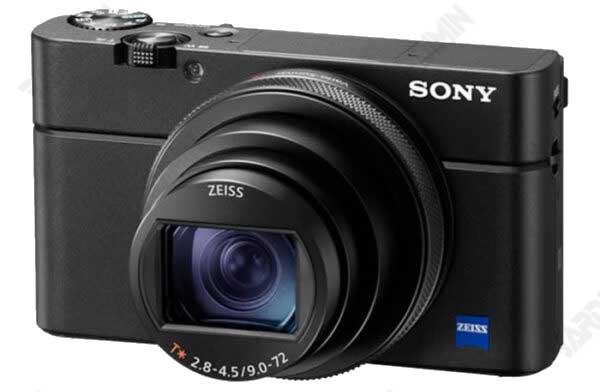
Compact cameras, commonly referred to as point-and-shoot, are the preferred choice for users who want a photography device that is practical, easy to use, and does not require a complicated setup. Although its popularity is starting to decline due to the presence of mobile phone cameras, some models still have excellent features that are not present in smartphones.
Compact cameras are perfect for those who don’t want to bother with the size and complexity of professional cameras like DSLR or Mirrorless. These cameras are designed for ease and practicality, although they have some limitations.
Advantages of Compact Cameras
1. Lightweight, Easy to Carry, and Affordable
Compact cameras are known for their small size and lightweight, making them very easy to take anywhere. It is also relatively more affordable compared to system cameras such as DSLR or Mirrorless, making it a good choice for beginners or casual photographers.
2. Equipped with a Good Zoom Lens
One of the advantages of a compact camera is the zoom lens that is already installed. Most compact cameras have zoom lenses with a wide range, allowing you to shoot from a distance without the need to change lenses.
3. Easy to Use
The compact camera is designed for users who don’t want to bother with manual settings. The advanced auto mode allows you to take good-quality pictures without the need to understand complicated photography techniques.
4. Ideal for Daily Use
Compact cameras are perfect for everyday use, such as on vacation, family events, or travel documentation. Its small size makes it inconspicuous and easy to use in a variety of situations.
Disadvantages of Compact Cameras
1. Manual Control Limitations
Compact cameras are easy to use, but they often have limitations in manual control. Settings such as aperture, shutter speed, and ISO are usually not fully regulated, reducing the creativity of photographers who want to experiment.
2. Lacking Low-Light Capability
Generally, compact cameras have smaller sensors compared to system cameras such as DSLR or Mirrorless. This makes its performance in low light conditions less good, with images that often look noisy or lack detail.
3. Doesn’t Support RAW Format
Most compact cameras cannot take pictures in RAW format, which stores more image information. RAW format is essential for more professional photo editing, so this limitation can be a problem for serious photographers.
4. Limited Image Quality
Although compact cameras provide better image quality than mobile phone cameras, they are still inferior compared to system cameras. The resolution and detail of the image are often not as good as those produced by DSLR or Mirrorless.
c. Bridge Camera (Prosumer)
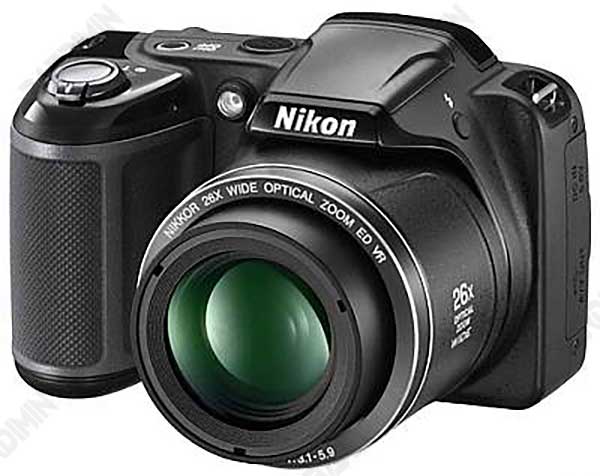
A bridge or prosumer camera is a type of camera that sits between a compact camera and a system camera such as DSLR or Mirrorless. This camera is intended for photographers who want more control and features than compact cameras, but don’t want to bother with the size and complexity of a system camera.
These cameras provide better manual control and have longer zooms, but still have a more compact design than DSLRs. Although the lenses on bridge cameras are not replaceable, some premium models have features that are close to those of professional cameras.
Advantages of Bridge Camera (Prosumer)
1. Better Manual Control
One of the main advantages of bridge cameras is the more complete manual controls. You can set the aperture, shutter speed, and ISO manually, giving you more flexibility in creating images to your liking.
2. Long Zoom Lens
Bridge cameras are usually equipped with very long zoom lenses, often reaching 50x or more. This allows you to take pictures from a distance, such as wildlife or sports photography, without the need to carry an additional lens.
3. Better Viewfinder and LCD Screen
Most bridge cameras are equipped with an electronic viewfinder (EVF) and a rotatable LCD screen. This feature is very helpful in image composition, especially in bright light conditions or when shooting from difficult angles.
4. Affordable Price Compared to System Cameras
While they offer more features than compact cameras, bridge cameras are typically more affordable than system cameras such as DSLR or Mirrorless. This makes it an attractive option for photographers who want to improve the quality of their images without spending a fortune.
Disadvantages of Bridge Cameras (Prosumer)
1. Image Quality Not as High as System Cameras
Bridge cameras provide more control and features, but the quality of the images produced is still below system cameras such as DSLR or Mirrorless. This is due to the smaller sensor size on bridge cameras.
2. Lens Cannot Be Replaced
One of the main drawbacks of bridge cameras is that the lenses are not replaceable. You don’t have the option to change lenses like on system cameras, reducing flexibility in a variety of shooting conditions.
3. Larger Size Than Compact Cameras
Although smaller than system cameras, bridge cameras are still larger and heavier compared to compact cameras. This can be an obstacle if you are looking for convenience in carrying a camera.
4. Poor Battery Life
With the use of an electronic viewfinder (EVF) and a large LCD screen, bridge cameras tend to consume more power. This means that you may need to have a spare battery ready if you plan to shoot for a long time.
d. System Camera
A system camera is a type of digital camera that allows users to switch lenses as needed, providing more flexibility compared to compact cameras or bridge cameras. This camera is often used by professional photographers and serious enthusiasts because it has a larger sensor, complete manual controls, as well as support for various accessories such as an external flash, microphone, and additional grips.
Why are camera systems more flexible?
System cameras offer greater flexibility in photography. With the ability to switch lenses, users can choose from a variety of lens types such as wide-angle, telephoto, and macro, which are suitable for a variety of photography styles such as portrait, landscape, and sports. Additionally, system cameras are typically equipped with larger sensors, such as APS-C or Full Frame, which produce sharper, better-quality images, especially in low-light conditions, as well as providing a more natural bokeh effect.
The camera also supports a variety of professional accessories, such as an external flash and microphone, which can improve the quality of photos and videos. With a complete manual mode, photographers can set ISO, shutter speed, and aperture with high precision. Finally, many of the latest models of system cameras now offer the ability to record high-resolution videos, ranging from 4K to 8K, and are equipped with improved image stabilization features, making them an excellent choice for videography.
Category Camera System: DSLR vs Mirrorless
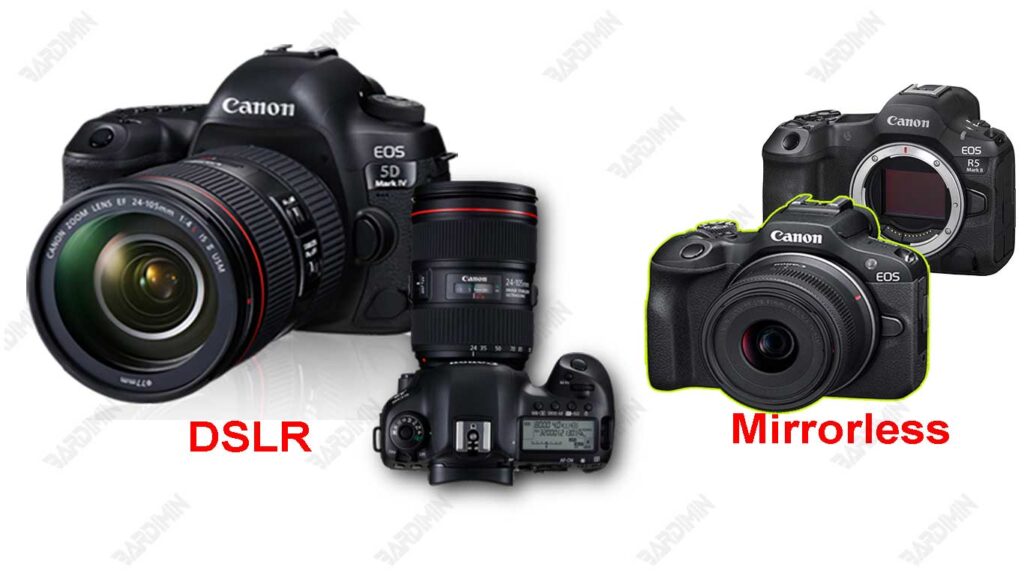
System cameras are divided into two main categories, namely DSLR (Digital Single-Lens Reflex) and Mirrorless (Tanpa Cermin).
| Feature | DSLR | Mirrorless |
| Design & Weight | Larger & heavier due to the presence of mirrors and pentaprisms. | It is smaller, lighter, and more compact because it does not have a mirror system. |
| Viewfinder | Optical Viewfinder (OVF) – viewing the image directly from the lens through a mirror. | Electronic Viewfinder (EVF) / LCD – viewing the digital image from the sensor. |
| Autofocus Speed | Fast autofocus in bright and low-light conditions. | Fast autofocus especially in videos and moving subjects ( Eye-Tracking AF technology is more advanced). |
| Battery Life | It is more durable because it does not rely on electronic screens. | It is more wasteful because it always uses a screen or EVF. |
| Lenses & Accessories | More lens options, as DSLR systems are longer developed. | Mirrorless lenses are becoming more and more modern, some models support adapters for DSLR lenses. |
| Video | Good, but often loses to Mirrorless in features like continuous autofocus. | It is superior, especially in 4K/8K video quality, high frame rate, and image stabilization. |
DSLR vs Mirrorless: Which One is Right for You?
Choose a DSLR if:
- You prefer an optical viewfinder (OVF) for a more natural and accurate shooting experience. With the optical viewfinder, you see the image directly through the lens without delay, providing a more instant shooting experience.
- You need longer battery life. DSLRs are usually more energy-efficient because they don’t use electronic screens or viewfinders, so the battery life is longer than mirrorless.
- You want to use a variety of old DSLR lenses without adapters. DSLR systems have a broader ecosystem of lenses and have been around for longer. You can use an old DSLR lens without a dedicated adapter, giving you more lens options.
Select Mirrorless if:
- You want a lighter and more compact camera. Mirrorless cameras are smaller and lighter than DSLRs because they do not have a mirror and pentaprism system, making them easier to carry and use in high-mobility shoots.
- You shoot videos often and need advanced autofocus and better image stabilization. Mirrorless cameras often have faster and more accurate autofocus systems, especially for video. Some models are also equipped with IBIS (In-Body Image Stabilization) which helps to produce more stable video footage.
- You want the latest technologies like Eye-Tracking AF, high frame rates, and 8K video. Many of the latest mirrorless cameras support Eye-Tracking AF, high frame rate recording capabilities, and 8K video, providing highly satisfying results for professional video content needs.