

Maintaining online privacy is important for many people in a connected digital world. The Darknet and Tor Network are here as a solution for those who want to stay anonymous and protect their online activities from surveillance. However, what exactly is the Darknet and how does the Tor Network work?
The darknet is often considered a hidden part of the internet, where data and information are inaccessible to ordinary users. On the other hand, Tor (short for The Onion Router) is software that allows access to the Darknet through a layered encryption system known as onion routing. The technology focuses not only on anonymity but also on freedom of expression, especially in countries with strict censorship.
What is Tor?
Tor, which stands for The Onion Router, is software created to maintain user anonymity while surfing the Internet. By using layered encryption similar to the onion structure, Tor protects user information from network traffic tracking and analysis. It also allows access to hidden networks such as Darknet, which cannot be accessed through regular browsers such as Google Chrome or Mozilla Firefox.
Tor was first introduced in 2002 as a project developed by the United States Naval Research Laboratory (US Naval Research Laboratory). The original goal was to create a secure communication tool for military intelligence. However, over time, Tor evolved into an open-source project that can be accessed by anyone, including activists, journalists, and the general public who want to maintain their privacy online.
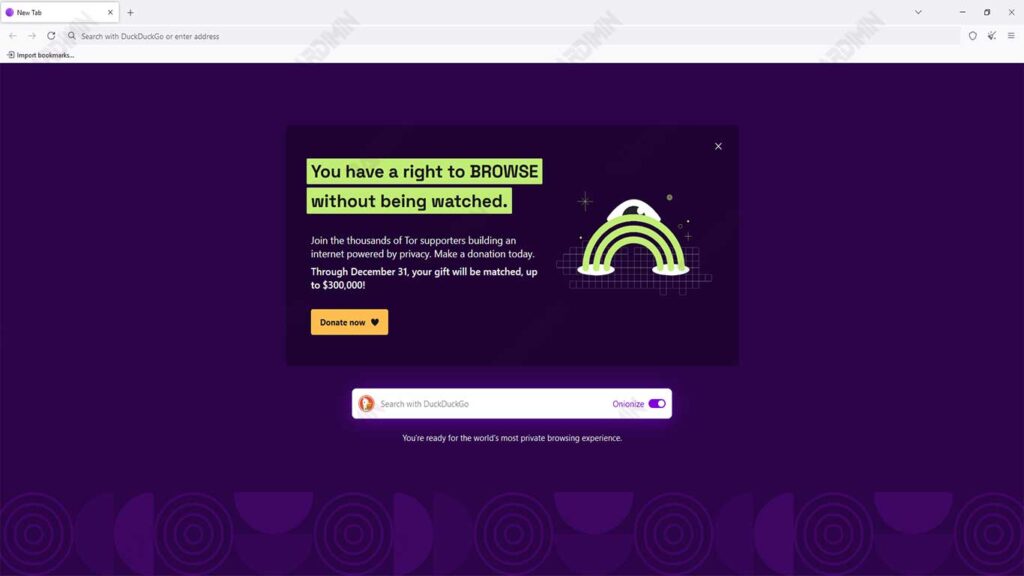
Since its launch, Tor has undergone many updates and improvements. Today, Tor Browser software is built on top of Mozilla Firefox, providing a familiar interface for users. Its popularity is constantly increasing, especially among those who need anonymous access to the internet, both for legitimate and illegitimate purposes.
How Tor Maintains the Anonymity of Its Users
Tor works by redirecting internet traffic through a series of relays maintained by volunteers around the world. Here’s how Tor maintains anonymity:
- When a user sends data through the Tor network, it doesn’t go directly to the destination. Instead, the data passes through several relays randomly.
- User data is encrypted multiple times before leaving the device. Each relay can only decrypt one layer of encryption to know the next.
- The data passes through up to 7,000 relays before reaching the final destination. This process makes traffic analysis very difficult, so user identities remain secure.
- Once the data reaches the last relay, it is decrypted and sent to the destination IP address without revealing the user’s real IP address.
How Tor and the Darknet Work
Tor and the Darknet serve to protect users’ identities uniquely, using a system called onion routing. This technology aims to provide anonymity by encrypting data in multiple layers, similar to onions. Here is a further explanation:
Onion Routing Mechanism and Layered Encryption
- Onion Routing is a way that wraps user data in multiple layers of encryption before it is sent over the network.
- Each layer encrypts certain information, including the sender’s IP address, so that the user’s identity remains hidden.
- The encrypted data is then sent through various relays managed by volunteers around the world.
Illustration of Data Processing Passing Through 7,000 Relays on the Tor Network
The process of sending data through the Tor network can be described as follows:
- The user requests to access the website.
- The data is encrypted with multiple layers.
- The encrypted data is sent through a series of relays, which can number up to 7,000 random relays:
- Each relay receives data, decrypting one layer to know the next relay.
- This process repeats until the data reaches the last relay.
- First Relay: The first relay only knows the user’s location, but not the final destination.
- Middle Relay: The next relay simply passes the data without knowing the origin or destination.
- Last Relay: The last relay removes the last layer of encryption and sends the data to the final destination, but it doesn’t know who the original sender is.
Pros of Using Tor
Tor has many advantages that make it an essential tool for internet users, especially those concerned about privacy and freedom of speech. Here are some of the key benefits of using Tor:
1. Privacy Maintained from Surveillance
One of the reasons many people choose Tor is to protect their online activities from the scrutiny of third parties, such as governments or large corporations.
- Tor hides the user’s IP address, so their identity remains secret.
- Activities carried out through Tor are difficult for internet service providers (ISPs) or network supervisors to track.
- The privacy provided by Tor is crucial in the digital age, where many companies collect user data for various purposes.
2. Freedom of Expression in a Censored Country
In countries that implement strict censorship, Tor has become an important tool for accessing information and expressing opinions without fear of consequences.
- Tor allows users to avoid website blocking carried out by the government.
- Activists and journalists can communicate safely without worrying about their identities being revealed.
- With the anonymity that Tor offers, users can avoid tracking and remain free to share sensitive information.
3. Examples of Using Tor for Legal Purposes
While it is often thought to be associated with illegal activities, Tor also has many legal benefits that support freedom and security in cyberspace. Some examples:
- Journalists use Tor to communicate with sources who do not want to be identified, especially when covering news in conflict areas or under scrutiny.
- Cybersecurity experts are leveraging Tor to test system weaknesses without having to reveal who they are.
- Ordinary people who want to maintain the privacy of their data, especially when using public Wi-Fi networks, choose Tor to avoid the risk of information theft.
Risks and Limitations of the Darknet
The darknet and the Tor Network provide anonymity and freedom for their users, but they also have risks and limitations that need to be considered. Here are some key points:
1. Possible Uses for Illegal Activities
The darknet, especially through the Tor network, is often associated with illegal activity. The most obvious example is the sale of illegal drugs. On the various black markets that can be accessed through Tor, users can buy illegal items such as drugs, weapons, and stolen goods.
The anonymity offered by Tor attracts people who want to make transactions without being detected by law enforcement. Although many Tor users use this network for legitimate purposes, the existence of a black market on the Darknet remains a major problem.
2. Tor’s Weaknesses in Detecting Access to Sites That Restrict the Tor Network
While Tor provides a high level of anonymity, there are drawbacks to its system. Many websites are now starting to implement access restrictions for users who access them through Tor. This is done to prevent illegal activities and protect yourself from potential security threats.
However, Tor does not have an effective feature to hide the fact that users access the site through the Tor network. This means that while the user’s identity may remain hidden, some sites may detect and block access from Tor users, thus limiting the freedom of access to information.
3. Security Risks When Not Using Tor Browser Properly
Using Tor does not guarantee complete security if not done correctly. Some of the risks that users may face include:
- Accessing regular sites with a non-Tor browser while connected to the Tor network can reveal your real IP address and compromise your anonymity.
- Downloading files from untrusted sources can lead to malware infections, which can expose personal information even if the user is on the Tor network.
- If the privacy settings on your device are incorrect, personal data such as location or identity information can be leaked.
Steps to Use Tor Safely
Using Tor to access the Darknet can provide privacy and anonymity, but it’s important to do so in a secure way. Here are the steps that can be followed:
1. Download and Install Tor Browser from Official Sources
Make sure you download the Tor Browser only from the official website at torproject.org to avoid unsafe software.
Follow the installation instructions according to the operating system you are using (Windows, macOS, Linux, or Android).
Avoid using Tor Browser versions from untrusted sources as they can contain malware that compromises your anonymity.
2. Don’t Enter Personal Information When Using the Darknet
Darknet is designed to maintain anonymity, but you could lose your anonymity if you enter personal information such as your name, address, or phone number.
Avoid logging into accounts that can be linked to your real identity, including email or social media.
Use an anonymous pseudonym or account for all activity on Darknet.
3. Use Additional VPNs to Improve Security
Tor provides anonymity, but using a VPN (Virtual Private Network) can add protection by encrypting your internet traffic before entering the Tor network.
VPNs hide Tor usage from internet service providers (ISPs), which can help avoid suspicion.
Choose a trusted VPN provider and don’t log user activity to maintain your privacy.
4. Don’t Access Suspicious Links
On Darknet, there are many strange links (ending in .onion) that can lead you to dangerous or illegal sites.
Avoid clicking on links without knowing their origin or content. Use trusted onion directories to find safe sites.
Always be wary of sites that ask for personal information or download files without permission, as this can be a way for malware to get in.