
Windows 11 includes a restartable apps mechanism that automatically reopens applications and File Explorer windows after a system restart or user logon. This behavior aims to preserve workflow continuity, but often increases startup load and disrupts fresh sessions. You can prevent Windows 11 from reopening previous apps and folders through the Accounts section in Settings and the View tab in Folder Options, without the need for third-party tools.
Modern operating systems increasingly prioritize seamless session transitions. Microsoft engineered a feature that captures the state of running applications and open folders, restoring them precisely as they were upon the next boot or login. While this design appears helpful at first glance, many IT professionals, technicians, and gamers discover its negative impact on early system performance. Understanding how to control this behavior is therefore a skill of measurable practical value.
Technically, the feature operates by recording the user session just before shutdown or restart. Windows stores a list of active programs and the paths of folders currently open in File Explorer into the user profile data. During the subsequent login, the system reads that data and re-launches the associated applications. This mechanism closely mirrors session restore in modern web browsers. On hardware with limited resources, the restoration process can noticeably lengthen startup time and consume RAM before the user even begins their primary tasks.
Why Windows 11 Reopens Previous Applications
The feature responsible for this behavior is officially labeled Automatically save my restartable apps and restart them when I sign back in. Microsoft placed it within the account sign-in options, separate from the traditional startup items list. This placement often confuses users looking to disable it. The setting first appeared in a Windows 10 update and has been retained through Windows 11 version 24H2 with improved integration.
In addition to applications, Windows maintains a separate mechanism that restores File Explorer windows to previously accessed folders. This setting resides inside Folder Options and operates independently from the application setting. Both must be managed individually to gain complete control over the startup behavior of the system.
The restartable apps feature is often mistaken for ordinary startup programs. In reality, it only applies to the last session that was not explicitly closed by the user before shutdown.
Impact of Restartable Apps on System Performance
Allowing Windows to automatically reopen applications directly affects boot time and memory consumption. The system must allocate processor cycles and RAM space for each restored program. On mid-range or entry-level hardware, this extra load can make the interface feel sluggish during the first moments after login. Users running heavy software such as video editors, programming IDEs, or game launchers experience the most significant impact.
Moreover, this feature can conflict with applications that have their own autostart routines. Some programs interpret the session restoration as a fresh launch and trigger a second initialization cycle. The result is increased CPU workload and slower response times in the critical early phase of operation.
Important for gamers: Automatic application recovery can interfere with GPU cooling after intense gaming sessions. If the system is shut down while a game remains active in the background, Windows attempts to relaunch it on the next power-on. This may cause a sudden temperature spike on components, particularly in gaming laptops with limited thermal headroom.
How to Prevent Windows 11 from Reopening Applications Automatically
The primary procedure to stop Windows 11 from reopening applications lies within the Settings menu, specifically under Sign-in options. The following steps apply to all editions of Windows 11, including Home, Pro, Enterprise, and Insider Preview variants. Ensure you are using an account with administrative privileges so the changes persist permanently.
- Open Settings from the Start Menu. You can also use the Windows + I keyboard shortcut for faster access.
- In the left navigation pane, select Accounts.
- Scroll on the right side and click Sign-in options.
- Locate the option that reads Automatically save my restartable apps and restart them when I sign back in. It sits beneath the Additional settings group.
- Slide the toggle to the Off position.
- Close the Settings window. The change takes effect immediately without requiring a restart.
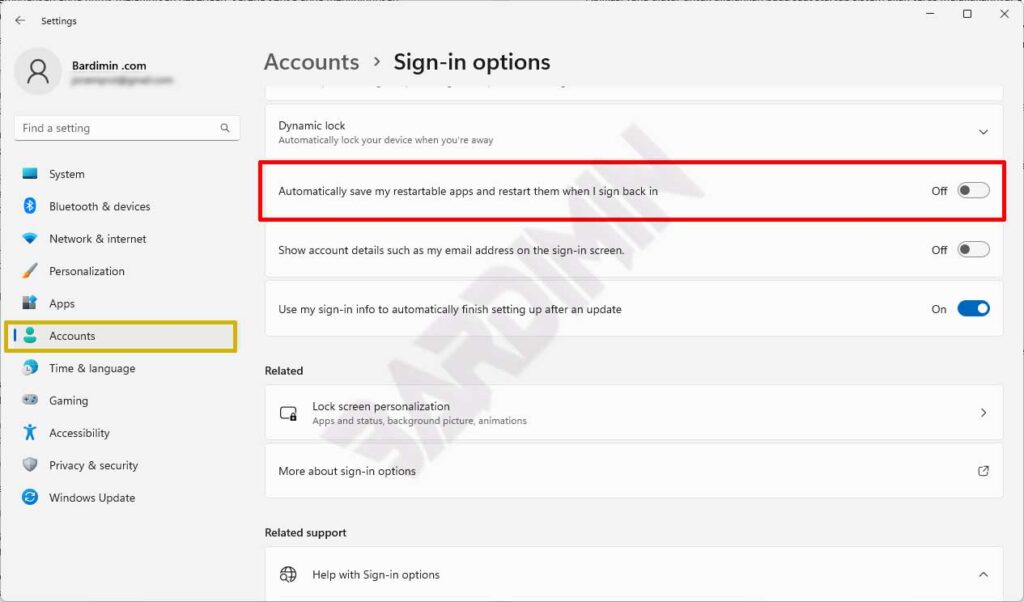
Once the toggle is switched off, Windows no longer saves the state of active applications during restart, shutdown, or logout. You can still launch programs manually or rely on the classic Startup folder for applications that genuinely need to run every time the system starts.
How to Stop File Explorer from Restoring Previous Folders
The setting that prevents File Explorer from restoring previously open folder windows resides in a different location. This feature is managed through the Folder Options dialog, a legacy interface present since Windows XP. Follow the complete procedure below to disable it:
- Open File Explorer by pressing Windows + E or clicking the folder icon on the taskbar.
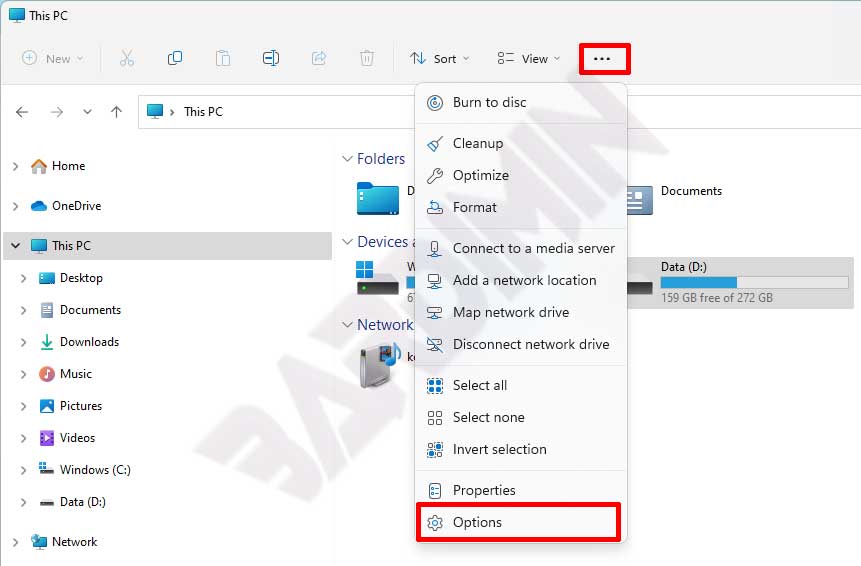
- In the command bar at the top, click the three horizontal dots (See more) on the right side.
- From the drop-down menu, select Options. This action opens the classic Folder Options dialog.
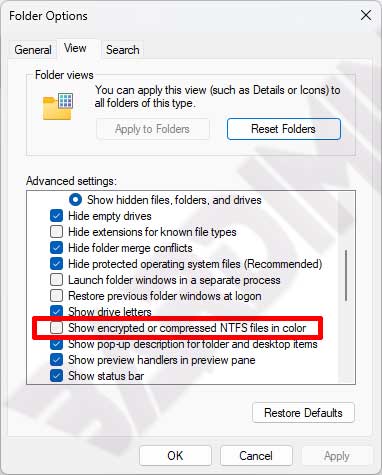
- Inside the Folder Options dialog, click the View tab.
- In the Advanced settings area, scroll down until you find Restore previous folder windows at logon.
- Clear the checkbox next to that option.
- Click Apply and then OK to save the configuration.
Both settings described above are independent. Disabling the restartable apps feature does not affect File Explorer behavior, and vice versa. Therefore, it is advisable to turn off both if you desire a completely clean startup experience. The procedure only needs to be performed once per user account on the system.
Verifying and Testing Your Changes
After applying the modifications to both settings, carry out a simple test to confirm the features are truly deactivated. Follow these verification steps:
- Open several applications such as Notepad, Calculator, and a web browser.
- Open a few File Explorer windows pointing to different folders.
- Perform a Restart from the Start Menu, not a full shutdown. Modern Windows uses hybrid shutdown that can preserve certain states; a restart ensures a complete boot cycle.
- After the system comes back up and you log in, check whether any applications or File Explorer windows have reappeared.
If applications or folders still appear, verify again that the toggle and the checkbox are in the correct position. Some major Windows feature updates are known to reset these settings to their defaults. Periodic rechecking is strongly recommended, especially after installing monthly cumulative updates.
Optimal startup performance is not just about raw boot speed. For technicians and gamers, every second saved in the first minute after login carries significant value—enabling a smoother workflow or an uninterrupted gaming session free of latency.
When to Re-Enable This Feature
Although many users choose to disable this functionality, certain scenarios exist where the restartable apps feature delivers genuine benefit. Professionals who work with multiple applications simultaneously and perform scheduled restarts frequently can keep the feature active. Productivity remains intact because all necessary tools are instantly available without the need to manually reopen each one.
Users with high-end hardware, such as workstations equipped with 32 GB or more of RAM and the latest NVMe storage, generally will not notice a meaningful performance hit. Under those conditions, the convenience of resuming work outweighs the few extra seconds added to the boot process.
To reactivate the feature, simply follow the same steps and return the toggle to the On position, while also re-checking the Restore previous folder windows at logon option. Changes are real-time and do not require a restart to take effect.
Additional Startup Management Options for Advanced Control
Beyond the two primary settings discussed, Windows 11 provides several layers of startup control that you can leverage to manage which applications run automatically. Here are the relevant layers:
- Task Manager Startup Tab: Controls programs registered under the registry key
HKEY_CURRENT_USER\Software\Microsoft\Windows\CurrentVersion\Run. Access it via Ctrl + Shift + Esc and switch to the Startup tab. - Task Scheduler Library: Some applications create scheduled tasks triggered at logon. Review them by running
taskschd.mscfrom the Run dialog. - Service Configuration: System services set to Automatic (Delayed Start) can influence early responsiveness. Use
services.mscfor inspection.
By combining management across these layers, you can create a truly clean and efficient startup environment. This approach is commonly adopted by technicians handling large-scale deployments, as well as gamers who want every frame per second undisturbed by unnecessary background processes. For further official information on the restartable apps feature, visit the Microsoft documentation on the Windows 11 help center. Learn more.
Conclusion
The restartable apps feature and File Explorer window restoration in Windows 11 offer flexibility that you can tailor to individual preference. The procedure to disable them is straightforward and requires only a few clicks within the Settings interface and Folder Options. With a clear understanding of the technical behavior behind these features, you can make informed decisions aligned with your specific needs—whether for professional productivity, system maintenance by technicians, or gaming performance optimizaton.