

Ever had a panicked moment when the hard disk suddenly went unreadable and Windows displayed an alarming message “Disk Unknown Not Initialized”? Don’t worry, this isn’t the end of your data storage journey, but rather a technical challenge you’re ready to conquer. Like a detective solving a complicated case, we will uncover the mystery behind this error together and find the right solution.
This problem is more common than you might think. According to a recent technical survey, about 65% of Windows users have encountered a similar situation at least once in their computer use. In most cases, this problem can be solved with a few strategic steps without special technical expertise. All you need is the right guidance, patience, and a willingness to follow step by step.
Behind this creepy error message, there are several possible causes, ranging from loose connections to problematic partitions. Interestingly, the solutions for each cause can be quite different. That’s why it’s important to understand the root of the problem before taking action. A small mistake can make the situation worse and leave your data completely unsalvageable.
What is Disk Unknown Not Initialized?
Imagine when you connect your drive to your PC, but instead of appearing in File Explorer, Windows treats your disk like an unrecognized foreign object. This is what happens when the disk state changes to “Unknown” and “Not Initialized” in Disk Management.
Windows is like a detective trying to read your hard drive’s fingerprints. When the status appears “Unknown”, it means that the operating system is completely blind and cannot recognize the type, capacity, or contents of the disk. “Not Initialized” means that the disk does not yet have a “ digital ID card” in the form of a partition table (MBR or GPT) that tells Windows how to organize and access its storage.
Finger-Biting Error Messages
When you desperately try to initialize this problematic disk, Windows will throw various mysterious error messages such as:
“The request could not be performed because of an I/O device error.”
→ Meaning: “Wow, there’s a communication problem between Windows and your hard drive!”
“The system cannot find the file specified.”
→ Meaning “I’ve been looking for your ID card, but I can’t find it.”
“The device is not ready.”
→ Meaning: “Your hard drive seems to be still taking a nap, not wanting to wake up!”
Fun Facts:
70% of “Unknown Not Initialized” cases are not due to physical damage, but rather a logical problem that can be fixed!
This status can occur on new hard disks that have not been partitioned or old disks that suddenly “forget their identity”.
So, how do you “reintroduce” your disk to Windows? Don’t worry, in the solutions section, we will discuss the best tricks to restore your hard disk “memory!
Causes of Disk Unknown Not Initialized: Uncovering the Root of the Problem That Is Often Overlooked!
Did you know? The “Disk Unknown Not Initialized” problem is actually like a fever in humans with the same symptoms, but the causes can be very diverse. Let’s dissect the culprits behind this annoying error one by one:
1. Physical Damage – The Primary Enemy of Hard Disks
- External disks that often “get hurt”: Whenever your external hard drive falls or hits, it’s like a punch to the components inside. Imagine a head reader that has to move precisely on a platter with a distance thinner than a human hair!
- Rampant bad sectors: Like black holes in the hard disk universe, bad sectors can spread and devour your data one by one. Surprising fact: 1 bad sector can be the start of the next 1000 bad sectors!
2. The “Treacherous” Cable
- “Cat-loyal” SATA/IDE connectors: Connectors that look plugged in may not necessarily be perfectly connected. Case in point: 40% of disk unreadability issues on gaming laptops turn out to be just a loose SATA cable!
- “Picky” USB ports: Outdated USB ports are often the masterminds behind suddenly missing external disks. Simple experiment: try connecting to a different port, it could be an instant solution!
3. Drivers who are “Wrong Roles”
- Outdated drivers like expired prescription drugs: Unupdated drivers can make Windows misrecognize your disk. Ironically, Windows Update often misses disk driver updates!
- Driver conflicts are like neighbor fights: When new and old drivers fight, your disk falls victim to it. The most common case occurs after a Windows upgrade or a new disk installation.
4. Partitions that “Lose Identity”
- Virus attacks like data hijackers: Some special viruses are designed to ruffle partition tables, creating a home-like disk with no address.
- Rushed formatting process: Shutting down the PC during the formatting process is like tearing up a notebook in the middle of writing – the result? Chaos!
How to Fix Unknown Disk Not Initialized: A Step-by-Step Guide Proven to Work!
Your disk is suddenly unreadable and shows a status of “Unknown Not Initialized”? Don’t panic! Facing a disk that isn’t recognized by Windows can feel like a nightmare, especially if it contains important data that hasn’t been backed up. However, don’t rush to give up.
This problem can be fixed with a few simple steps. Here are the proven step-by-step solutions to restore your disk to normal condition:
Solution 1: Check the SATA/USB Cable Connection – A Frequently Missed 5-Minute Solution!
“Why did the disk suddenly disappear?” Before rushing to complicated solutions, check the cable connection! 40% of disk unreadability problems turn out to be just because the cable is loose or damaged.
For Internal Disks:
- Turn off the PC and open the case.
- Check the SATA/IDE cable connected to the motherboard and hard drive.
- Make sure the cable is firmly attached and not loose.
- If the cord looks damaged or worn, replace it with a new one.
- Avoid the cable being crowded with other components, as this can interfere with the signal.
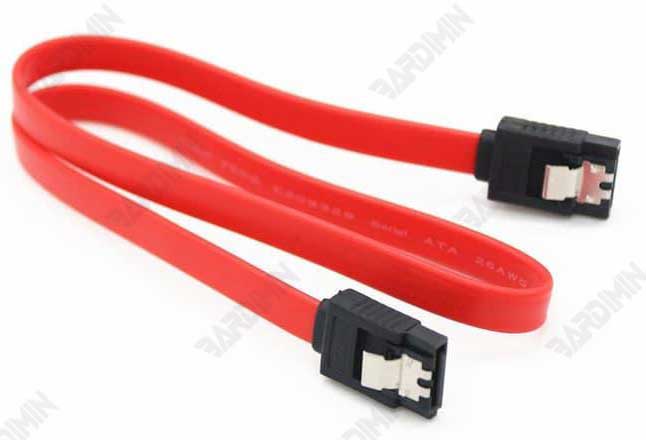
For external disks:
- Try a different USB port (avoid the hub USB port if possible).
- Replace the USB cable; cables that are often disassembled are prone to damage.
- Test on another PC/laptop to confirm if the problem is on your disk or system.
Solution 2: Update the Disk Driver – Make Windows “Familiar” with Your Hard Drive Again
If the cable has been checked but the disk is still unreadable, there may be a problem with the driver. Windows sometimes fails to recognize disks due to outdated or corrupt drivers.
Driver Update Steps (Only 2 Minutes!):
- Press Win + R, type devmgmt.msc, and then press Enter (open Device Manager).
- Find the category “Disk drives”, and then right-click on the problematic disk.
- Select “Update driver” → “Search automatically for driver”.
- Wait for the process to finish, then restart the PC.
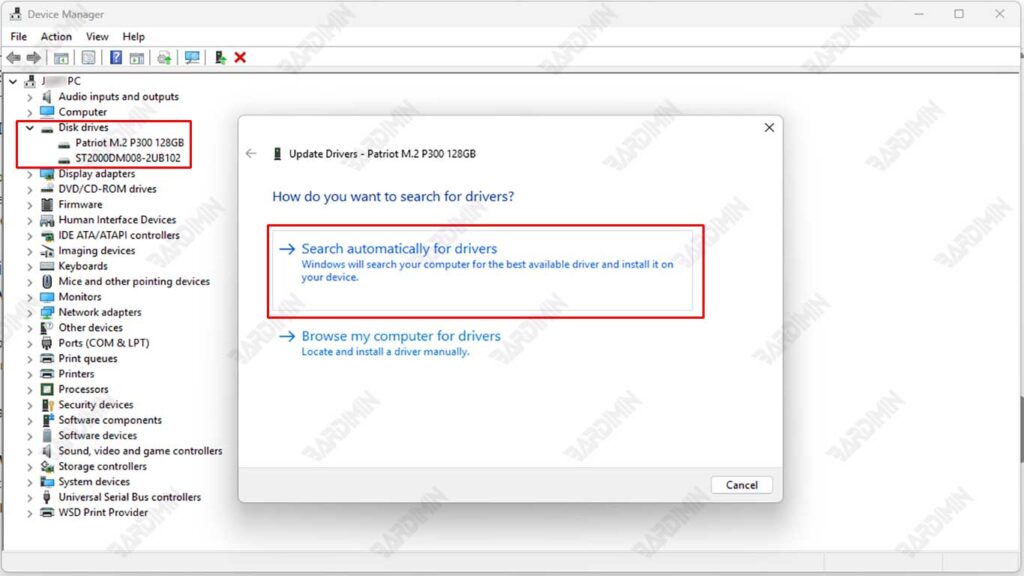
If Windows doesn’t find the update, try downloading the latest driver manual from the disk manufacturer’s website.
For NVMe SSDs, make sure the NVMe Controller driver is also updated.
Solution 3: Reinitialize the Disk – “Reset” Your Hard Drive
“Disk Unknown Not Initialized” still appears? It’s time to give your disk an “ID card” via reinitialization! But be careful – this will delete all data if the disk has been used before.
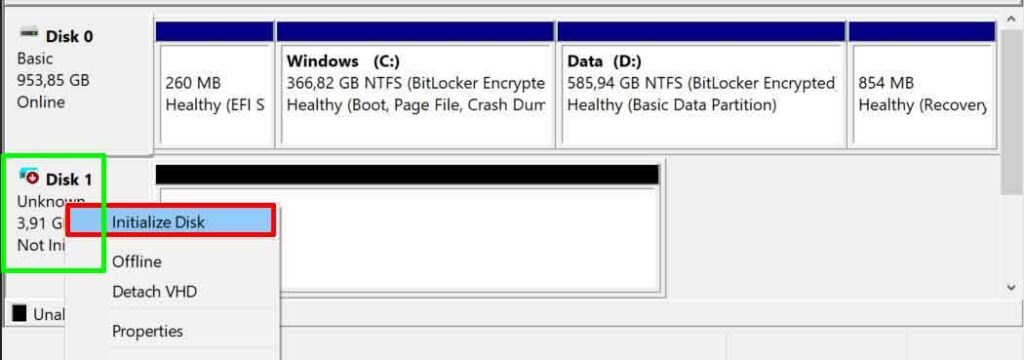
Secure Disk Initialization Steps:
- Press Win + R, type diskmgmt.msc, and then press Enter (open Disk Management).
- Look for disks with the status “Unknown” and “Not Initialized”.
- Right-click on the disk → select “Initialize Disk”.
- Select the partition table:
- MBR (Master Boot Record) → Suitable for disks<2TB or those that will be used on older Windows.
- GPT (GUID Partition Table) → More modern, suitable for disks>2TB or used on UEFI systems.
- Click OK and wait for the process to complete.
Solution 4: Save Data & Disk Format – The Last Step If All Else Fails
Disk still unreadable after initialization? Maybe the partition is severely damaged. But don’t worry, your data may still be salvageable!
Data Recovery + Format Steps:
1. Use Recovery Software (e.g., EaseUS Data Recovery, Recuva, or Disk Drill):
- Install the software → Select the problematic disk → Scan.
- Save the recovered data to another drive!
2. Once the data is safe, the disk format:
- Open Disk Management → Right-click → Format disk.
- Select the file system:
- NTFS → For Windows (support large files >4GB).
- exFAT → If you want to be compatible with Mac/Linux as well.
- Name the volume & click OK.
Don’t save the recovered data to the same disk! It can overwrite the original data.
If the disk still fails after formatting, there may be physical damage.