

Solid State Drives (SSDs) have become the top choice for data storage in the world of technology. However, many myths are circulating regarding the ability of SSDs to store data for a very long time, especially without a power supply.
An SSD is a storage device that uses flash memory to store data. Unlike Hard Disk Drives (HDDs) that use spinning disks, SSDs have no moving parts, making them more durable and fast in data access.
SSDs have become a top choice for many users and professionals who need fast, reliable, and efficient data storage. Its speed, durability, and power consumption advantages make it a superior storage solution over traditional HDDs.
Myths and Facts About Data Retention on SSDs
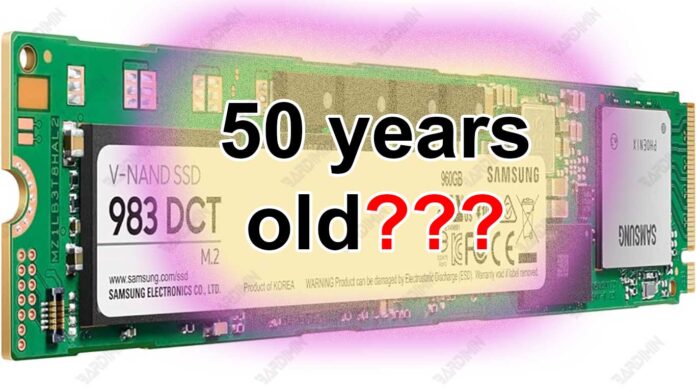
There are claims that SSDs are capable of storing data for up to 50 years without a power supply. These claims are often found on various tech forums and discussion sites, attracting the attention of many users looking for long-term data storage solutions.
Why is this claim popular?
- New Technology Appeal: SSDs are a relatively new storage technology compared to HDDs, so there is a lot of hope and speculation about their capabilities.
- Lack of Technical Understanding: Many users may not fully understand how flash memory works and the factors that affect data retention.
- Promotion and Marketing: Some claims may come from marketing strategies that exaggerate the advantages of SSDs to attract consumer interest.
Factors Affecting Data Retention on SSDs
Types of Flash Memory
1. SLC (Single-Level Cell)
SLC (Single-Level Cell) is a type of flash memory that stores one bit of data per cell. It is the most reliable type of memory and has the longest lifespan among all types of flash memory.
- Advantages:
- Ultra-fast read/write speeds.
- Excellent data retention.
- Long cell lifespan.
- Cons:
- The high cost of production, makes it more expensive.
2. MLC (Multi-Level Cell)
MLC (Multi-Level Cell) stores two bits of data per cell, making it more economical than SLC, but with some compromises in terms of speed and lifespan.
- Advantages:
- Lower cost compared to SLC.
- Higher storage capacity.
- Cons:
- Slower read/write speeds than SLC.
- Lower data retention and cell life compared to SLC.
3. TLC (Triple-Level Cell)
TLC (Triple-Level Cell) stores three bits of data per cell, making it a cheaper and denser option than MLC.
- Advantages:
- Lower cost.
- Higher storage capacity.
- Cons:
- Slower read/write speeds.
- Lower data retention and cell lifespan compared to MLC.
4. QLC (Quad-Level Cell)
QLC (Quad-Level Cell) stores four bits of data per cell, offering the highest storage capacity and lowest cost, but with the greatest compromise in terms of performance and durability.
- Advantages:
- The lowest cost.
- Highest storage capacity.
- Cons:
- The slowest read/write speed.
- Lowest data retention and cell life among all flash memory types.
Comparison of Data Retention Capabilities of Each Type
| Types of Flash Memory | Number of Bits per Cell | Read/Write Speed | Data Retention | Cell Life | Cost |
| SLC | 1 | Very Fast | Excellent | Long | Tall |
| MLC | 2 | Fast | Good | Keep | Keep |
| TLC | 3 | Slow | Enough | Low | Low |
| QLC | 4 | Very Slow | Less | Very Low | Very Low |
Storage Environment
- Temperature: High temperatures can accelerate the degradation of memory cells in SSDs, reducing data retention capabilities. SSDs that are stored at high temperatures tend to lose data faster.
- Humidity: High humidity can also damage the electronic components in an SSD, although it has a smaller effect than temperature.
The Ideal Storage Way to Extend the Life of Data
- Store at Room Temperature: Keep the SSD at a stable room temperature, ideally between 20°C to 25°C.
- Avoid Extreme Humidity: Store the SSD in a dry place with controlled humidity.
- Use Protectors: Store SSDs in protective cases or anti-static containers to protect them from dust and moisture.
Writing Cycle and Endurance
Whenever data is written to a flash memory cell, it undergoes a slight degradation. Over time, this degradation can reduce the ability of cells to store data reliably. The write cycle refers to the number of times data can be written and deleted on an SSD before its cells begin to lose integrity.
- Endurance: A metric that measures how many write cycles an SSD can handle before it degrades significantly. SLC has the highest endurance, followed by MLC, TLC, and QLC.
Data Retention Test Results on SSDs under Different Conditions
Research conducted by PCWorld tested the data retention capabilities of SSDs with various types of flash memory under different temperature conditions. This trial was conducted to understand the extent to which SSDs can retain data without a power supply.
Testing Conditions
- Room Temperature (25°C): SSDs are tested under stable room temperature conditions.
- High Temperature (35°C): SSDs are tested under higher temperature conditions to simulate less-than-ideal storage scenarios.
- Extreme Temperature (45°C): SSDs are tested under extreme temperature conditions to measure the limits of data retention capabilities.
Test Results
- SLC (Single-Level Cell): At room temperature, SLC is capable of retaining data for up to 10 years. At high temperatures, data retention decreases to about 5-7 years and at extreme temperatures to 2-3 years.
- MLC (Multi-Level Cell): At room temperature, MLC can retain data for up to 5-7 years. At high temperatures, data retention decreases to about 3-5 years and at extreme temperatures to 1-2 years.
- TLC (Triple-Level Cell): At room temperature, TLC can retain data for up to 3-5 years. At high temperatures, data retention decreases to about 2-3 years and at extreme temperatures to 6-12 months.
- QLC (Quad-Level Cell): At room temperature, QLC can retain data for up to 2-3 years. At high temperatures, data retention decreases to about 1-2 years, and at extreme temperatures to less than 6 months.
PCWorld’s research shows that the data retention capabilities of SSDs are greatly influenced by the type of flash memory and storage conditions. SSDs with SLC flash memory have the best data retention, while QLC has the worst data retention. High temperatures significantly accelerate data degradation on all types of SSDs. Therefore, for long-term data storage, it is important to store the SSD at a stable room temperature and choose an SSD with a more reliable type of flash memory such as SLC or MLC.
User Experience
According to discussions conducted by users and experts on Quora, many experiences and comments talk about data retention on SSDs from a practical point of view.
User Experience
- Professional Users: Many professional users who work in IT and data storage report that they rarely rely on SSDs for long-term data storage without power. They are more likely to use HDDs or other more stable storage solutions for data archiving.
- Consumer Users: Home users are usually more worried about data loss in the short term. They often rely on SSDs for speed and day-to-day performance, but still back up to other storage media at regular intervals.
Real Case Studies of Different Types of SSDs
- SLC SSDs: One user reported that SSDs with SLC flash memory used in industrial environments were able to retain data for more than 5 years without a power supply, even in quite volatile temperature conditions.
- MLC SSDs: Other users have reported that MLC SSDs used in data center servers are capable of retaining data for 3-4 years without a power supply, noting that the SSDs are stored under controlled temperature conditions.
- TLC and QLC SSDs: Many users report that SSDs with TLC and QLC flash memory are more susceptible to data loss in less than 2 years without a power supply, especially if stored in high-temperature conditions or unstable environments.
Discussions on Quora confirm that flash memory type and storage conditions are critical factors in data retention on SSDs. SLC and MLC provide the best performance for data retention, while TLC and QLC are more suitable for high-capacity, low-cost uses, but not for long-term data storage without a power supply. Users should consider the type of flash memory used in their SSD and make sure to store the SSD in ideal environmental conditions to maximize data lifespan.
SSD Recommendations Based on Flash Memory Type
Choosing a high-quality SSD is essential to ensure optimal data retention. Here are some SSD recommendations based on flash memory type:
- SLC (Single-Level Cell):
- Samsung 983 DCT: This SSD is known for its reliability and high performance, ideal for business and industrial applications.
- Intel Optane SSD 900P: Provides exceptional performance and durability, perfect for professional users who need high speed and longevity.
- MLC (Multi-Level Cell):
- Samsung 860 Pro: Known for its high speed and durability, this SSD is a great choice for users who need optimal performance and good data retention.
- Crucial MX500: Offers a balance between performance and cost, with good durability for everyday use.
- TLC (Triple-Level Cell):
- Samsung 970 EVO Plus: Provides excellent read/write speeds and decent durability, perfect for users looking for high performance at a reasonable price.
- Western Digital WD Blue 3D NAND: This SSD offers a large capacity with good performance, ideal for everyday data storage.
- QLC (Quad-Level Cell):
- Samsung 860 QVO: This SSD offers a large capacity at an affordable price, suitable for data storage that does not require high performance.
- Intel 660p: Offers a good balance between large capacity and decent performance, at a competitive price.
Analysis
Based on information from Quora and PCWorld, the claim that SSDs can retain data for up to 50 years without power tends to be exaggerated. Factors such as the type of flash memory, storage environment, temperature, and frequency of use greatly affect the SSD’s ability to retain data.
| Factor | Influence on Data Retention |
| Types of Flash Memory | SLC/MLC is better than TLC/QLC in terms of data retention |
| Temperature and Humidity | High temperatures accelerate data degradation |
| Endurance and Write Cycles | Frequently used SSDs have worse data retention |
| Long-Term Storage | For the long term, SSDs should be stored in ideal environmental conditions |
Conclusion
Based on various research and user experience, Solid State Drives (SSDs), despite their high speed and performance, are not ideal for long-term data storage without a power supply. Data on SSDs can degrade over time, especially if stored in sub-ideal temperature conditions.
Understanding the type of flash memory used in SSDs is essential to know the data retention capabilities and memory cell lifespan. SLC (Single-Level Cell) offers the best data retention, while QLC (Quad-Level Cell) has the worst data retention. In addition, storage conditions such as temperature and humidity also greatly affect the lifespan of the data on the SSD.